Diabetes
Diabetes mellitus (or diabetes) is a chronic, lifelong condition that affects your body's ability to use the energy found in food. There are two major types of diabetes: type 1 diabetes and type 2 diabetes. All types of diabetes mellitus have something in common. Normally, your body breaks down the sugars and carbohydrates you eat into a special sugar called glucose. Glucose fuels the cells in your body. But the cells need insulin, a hormone, in your bloodstream in order to take in the glucose and use it for energy. With diabetes mellitus, either your body doesn't make enough insulin, it can't use the insulin it does produce, or a combination of both.
Since the cells can't take in the glucose, it builds up in your blood. High levels of blood glucose can damage the tiny blood vessels in your kidneys , heart, eyes, or nervous system. That's why diabetes -- especially if left untreated -- can eventually cause heart disease, stroke, kidney disease, blindness, and nerve damage to nerves in the feet.
Type 1 Diabetes
Type 1 diabetes is also called insulin-dependent diabetes. It used to be called juvenile-onset diabetes, because it often begins in childhood. Type 1 diabetes is an autoimmune condition. It's caused by the body attacking its own pancreas with antibodies. In people with type 1 diabetes, the damaged pancreas doesn't make insulin.
A number of medical risks are associated with type 1 diabetes. Many of them stem from damage to the tiny blood vessels in your eyes (calleddiabetic retinopathy), nerves (diabetic neuropathy), and kidneys(diabetic nephropathy). Even more serious is the increased risk of heart disease and stroke.
Type 2 Diabetes
Type 2 diabetes used to be called adult-onset diabetes, but with the epidemic of obese and overweight kids, more teenagers are now developing type 2 diabetes. Type 2 diabetes was also called non-insulin-dependent diabetes.
With Type 2 diabetes, the pancreas usually produces some insulin. But either the amount produced is not enough for the body's needs, or the body's cells are resistant to it. Insulin resistance, or lack of sensitivity to insulin, happens primarily in fat, liver, and muscle cells.
People who are obese -- more than 20% over their ideal body weight for their height -- are at particularly high risk of developing type 2 diabetes and its related medical problems.
An Hb A1C test is a blood test that estimates average glucose levels in your blood over the previous three months. Periodic Hb A1C testing may be advised to see how well diet, exercise, and medications are working to control blood sugar and prevent organ damage.
WHAT TO EXPECT FROM OUR PROGRAM?
Stop Insulin completely, Stop/Minimizeother drugs.
Improved Cardio vascular health
High Risk of Damage to Eye, Kidney,Nerves , stroke can be prevented.
Stable control of blood sugar
Marked improvement in symptoms
Increased energy levels
Improved immunity.
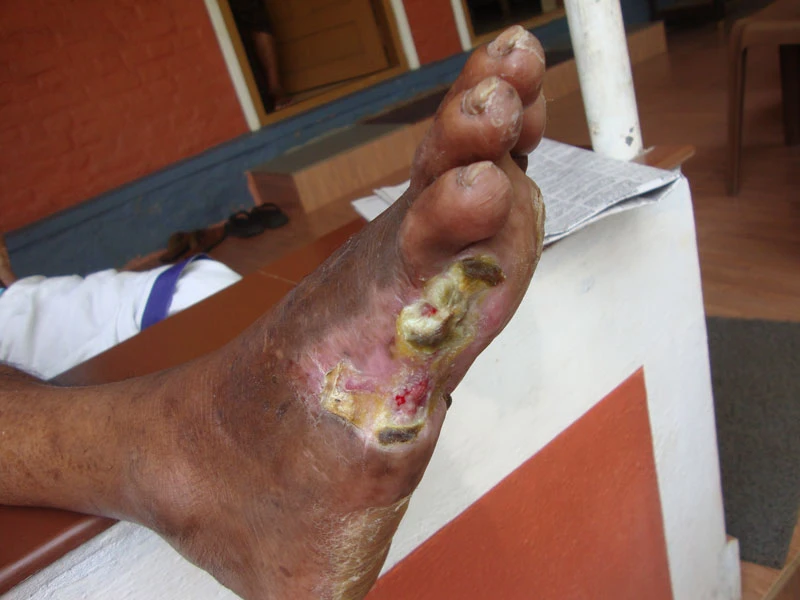
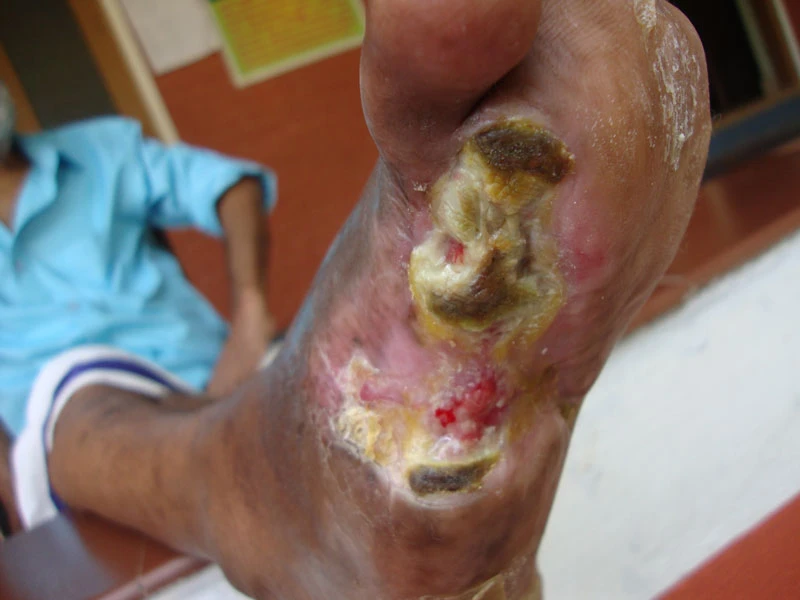
Diabetes and foot
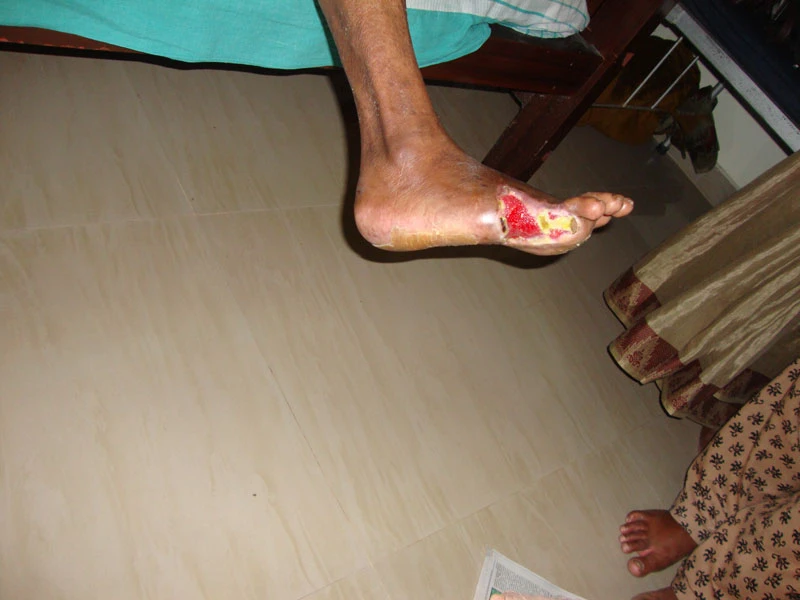
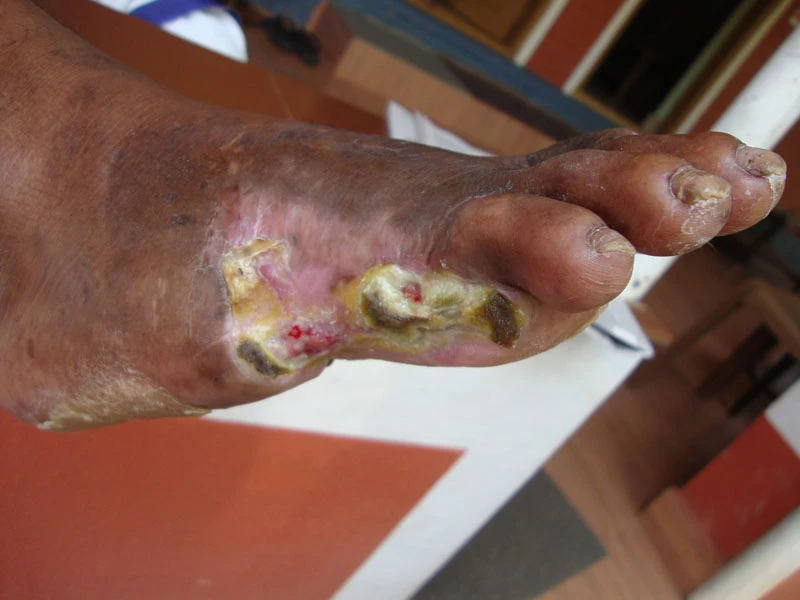
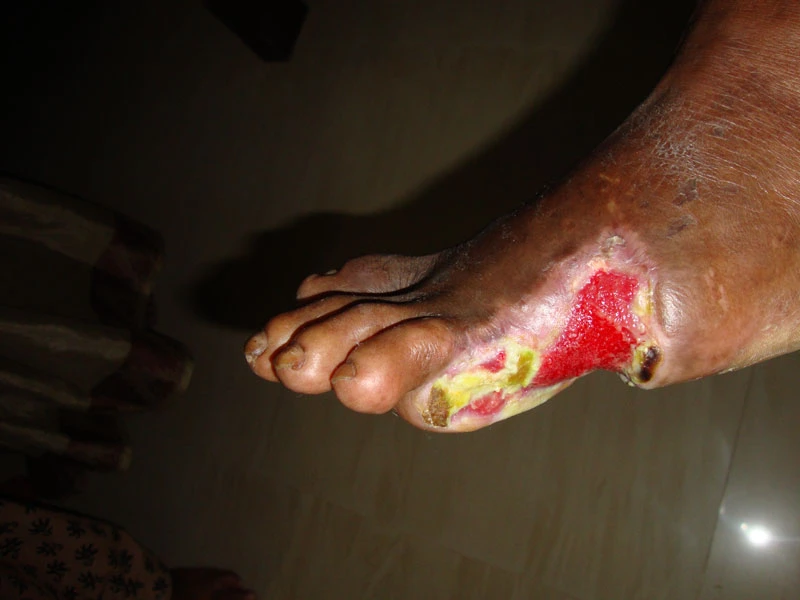
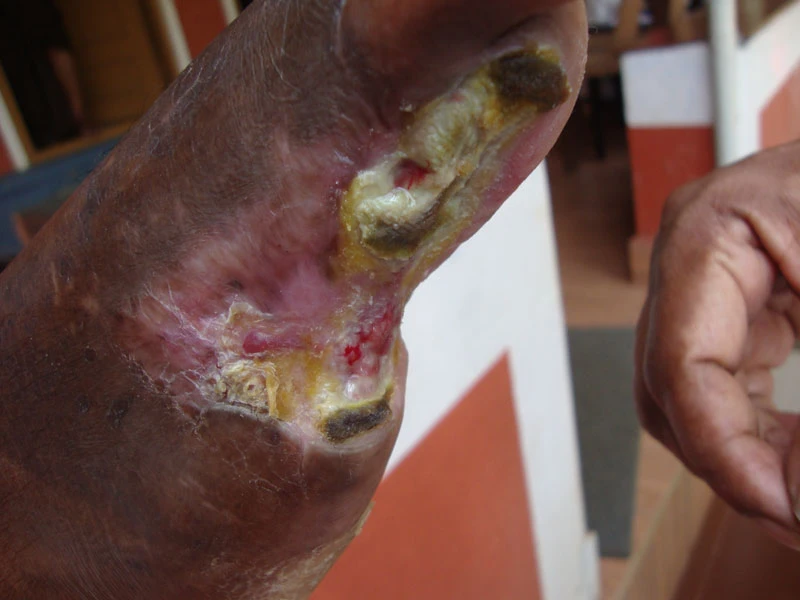
Blood vessel and nerve damage linked with diabetes can lead to serious infections that are extremely hard to treat. Often the first place you have a problem is your feet. When you lose the ability to feel your toes and feet, you are more likely to injure them without knowing it. Even a minor injury, such as a small cut, can develop into an ulcer and a serious infection.
Infections of the feet can spread up into the leg. Sometimes the infection is so severe that toes, the foot, and/or possibly part of the leg must be amputated.
Amputations are done when efforts to save the foot or leg are unsuccessful or the infection is causing extensive tissue damage. In all cases, doctors save as much of a person's foot or leg as possible.
Two main conditions, peripheral artery disease (PAD) and peripheral neuropathy, are responsible for the increased risk of foot problems in people with diabetes.
Gangrene (dry gangrene) is tissue death due to absence of blood circulation. It can be life-threatening if bacterial infection develops (wet gangrene).
Many diabetes-related foot problems can be prevented by good control of blood sugar levels combined with appropriate care of the feet.
What to expect from our program
- Good Control Over diabetes and sugar with in days.
- In case of wet gangrene ( infected wound ) , easy control over the infection
- Easy healing of wound, that saves from amputation.